

Top 5 Apps for Learning Foreign Languages
- 04.08.26
- 27
- 0

Finding a decent language-learning service can be a frustrating experience. Marketers promise fluency in just a couple of weeks, but often deliver nothing more than repetitive memorisation. We selected eight genuinely effective options for different goals. There is no universal magic solution here, but each tool solves a specific problem extremely well.
LingQ – Best for Achieving Real Fluency
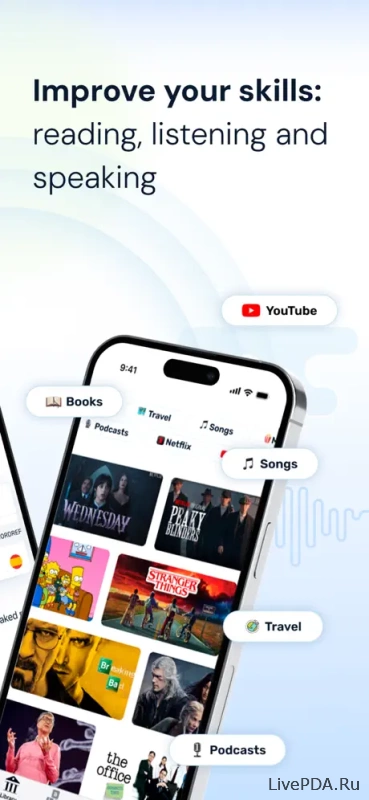
LingQ is built around a simple idea: you learn a language more effectively when you read and listen to content that genuinely interests you. There are no pre-written, childish dialogues. You can import a YouTube video, a recent article, or even an entire novel.
Tap an unfamiliar word, and the app instantly shows a context-based translation and adds it to your personal vocabulary list. The system then tracks your progress automatically.
What the service can do:
- Turn almost any online text or video into an interactive lesson.
- Track the number of words you have learned and motivate you with milestones such as 5,000 or 10,000 words.
- Play audio files in the background while you walk or work out.
The platform can take learners from complete beginner to a confident advanced level. Its main drawback is the learning curve. The interface looks more complicated than those of conventional apps, and speaking practice will have to be done elsewhere. LingQ supports more than 50 languages.
Duolingo – Best for Building a Daily Habit
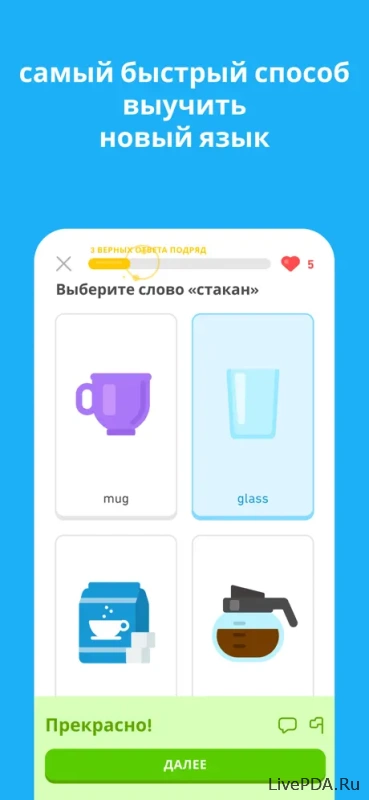
The world’s most popular language-learning app wins users over through gamification. Streaks, experience points, and competitive leagues genuinely encourage people to complete lessons every day.
Its greatest strength lies in habit formation. You spend around 15 minutes a day learning basic vocabulary along the way. The app is also excellent for becoming familiar with new writing systems, including Korean, Japanese, and Greek.
However, it is difficult to progress beyond the A2 level with Duolingo alone. Its exercises teach you to recognise patterns rather than communicate freely. Even after six months of using only this app, you may still struggle to hold a real conversation with a native speaker. Duolingo offers more than 40 languages.
Babbel – Clear Structure and Practical Conversation
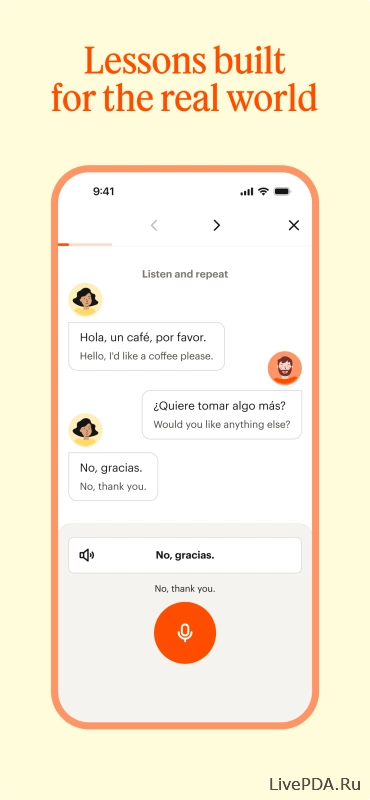
Babbel takes a mature, systematic approach. Its lessons are created by professional teachers, so the experience feels more like a complete course than a game.
The developers focus heavily on speech recognition and detailed grammar explanations. Lessons take around 10–15 minutes and fit easily into a daily commute. You immediately learn useful phrases and sentence structures for travel and everyday life.
The main limitation is the relatively small catalogue of only 14 languages. Most are European, with Indonesian being one of the few exceptions. Learners interested in many Asian or Middle Eastern languages will need to look elsewhere.
Rosetta Stone – Complete Immersion Without Translation
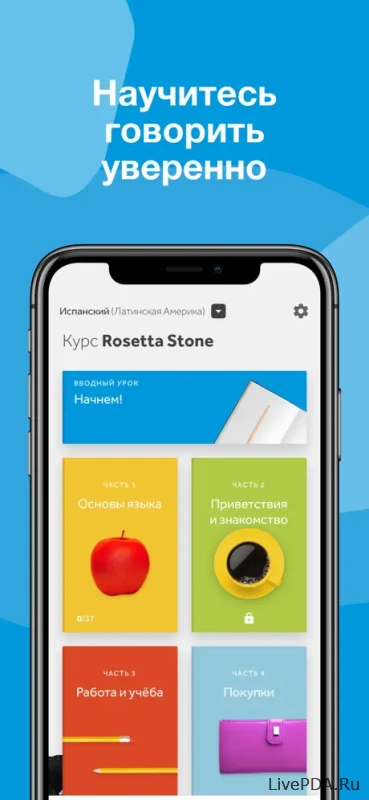
One of the oldest platforms on the market teaches languages through associations. You see an image, hear a word or phrase, and understand its meaning without relying on your native language.
This approach helps eliminate the habit of mentally translating every sentence. The TruAccent system instantly evaluates your pronunciation and helps you develop a more accurate accent. The method is particularly well suited to visual learners.
The downside is that adults may find it difficult to learn without direct grammar explanations. Progress can also feel rather slow. Rosetta Stone offers 25 languages.
Pimsleur – Audio-Only Language Learning
This legendary audio course is based on spaced repetition. Every lesson lasts exactly 30 minutes, and you do not need to look at your smartphone screen at all.
The service is ideal for drivers and people with busy schedules. You simply listen to dialogues and repeat phrases after the speaker. The method quickly develops listening comprehension and helps you speak more naturally.
There is almost no practice for reading or writing. The programme also follows a strictly linear structure. However, its selection of courses for certain less common languages is unusually strong. Pimsleur supports more than 50 languages.
italki – Best for Real Conversation Practice
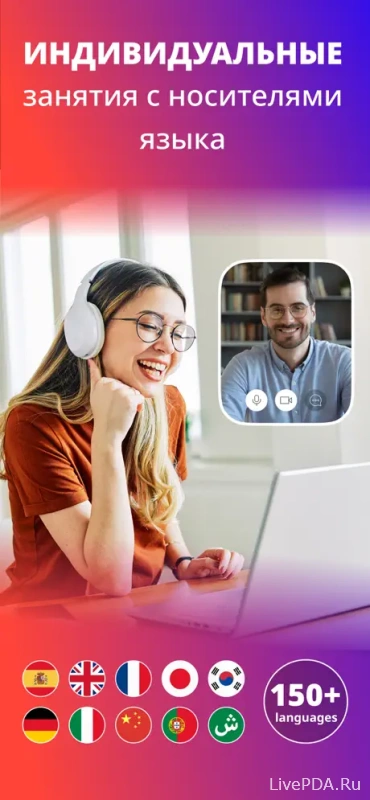
This is not a conventional language course but a huge marketplace for tutors. You choose a professional teacher or a native-speaking community tutor and meet them through video calls.
No app can fully replace a conversation with a real person. Even one hour of speaking practice per week can provide a major boost and help overcome the language barrier. The platform offers tutors for around 150 languages and almost every possible learning goal.
The only requirement is a minimal vocabulary before your first lesson. Trying to hold a conversation as a complete beginner without knowing a single word can be extremely difficult.
Anki – A Powerful Vocabulary Memorisation Tool
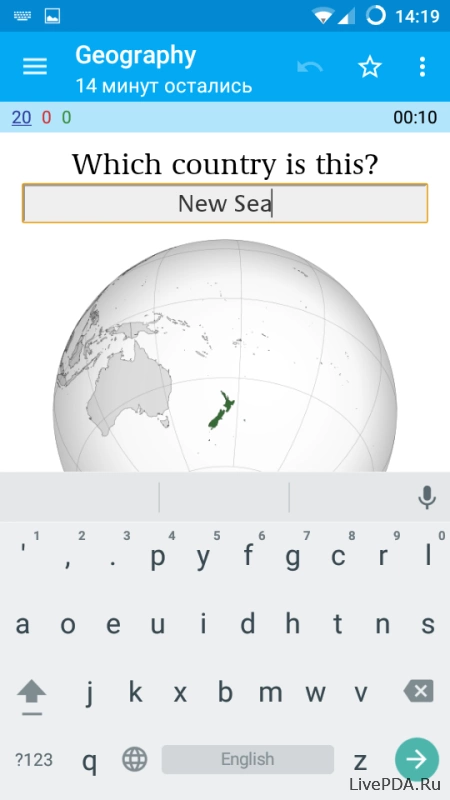
This free, open-source tool uses an intelligent spaced-repetition algorithm. There are no colourful illustrations, levels, or rewards. It is simply an exceptionally effective vocabulary trainer.
The algorithm shows you a flashcard at the exact moment you are about to forget it. The user community has created ready-made decks for virtually every language and topic. Anki is especially valuable for memorising Japanese kanji or Chinese characters.
The tool requires strong self-discipline. It will not explain grammar rules or evaluate your pronunciation, but it can embed new vocabulary firmly in your long-term memory.
Language Transfer – Understanding Grammar Instead of Memorising Rules
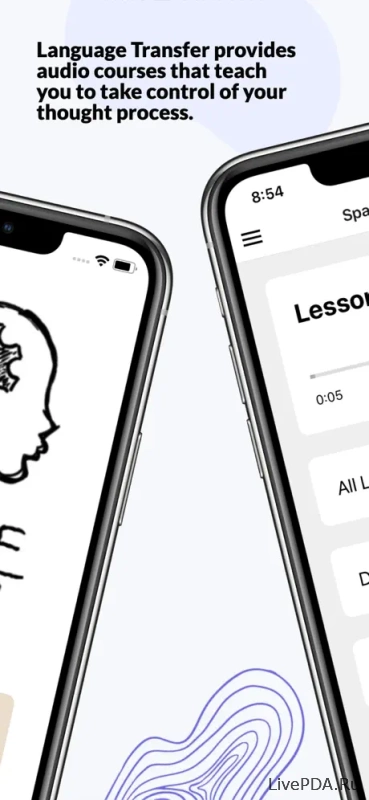
This free audio course was created and recorded almost entirely by its founder, Mihalis Eleftheriou. Instead of forcing learners to memorise grammar rules, he teaches them to understand the underlying logic of the language.
The instructor explains how sentences are constructed and helps you build increasingly complex phrases on your own. Listeners gain a solid foundation without taking extensive notes or relying on dry memorisation.
The catalogue contains only nine languages: Spanish, French, German, Italian, Greek, Arabic, Swahili, Turkish, and Pashto. There is no dedicated reading, writing, or speaking practice, so Language Transfer works best when combined with other tools.